
Suggestions





















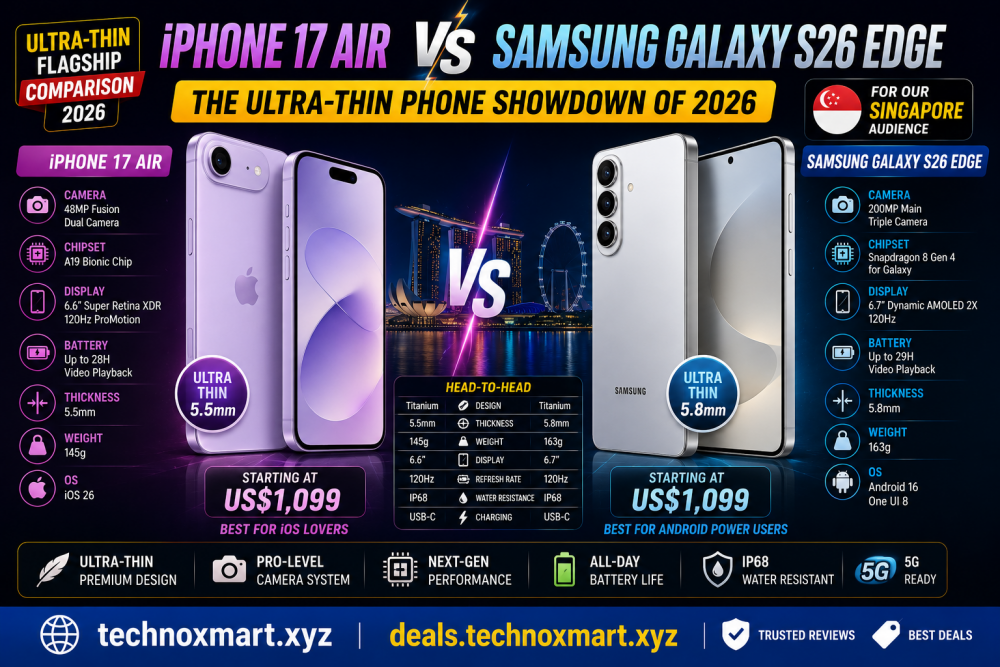
iPhone 17 Air vs Samsung Galaxy S26 Edge: The Ultra-Thin Phone Showdown of 2026 Ultra-thin smartphones are making a dramatic comeback, and 2026 is shaping up to be the year when sleek design matters just as much as raw performance. Instead of building heavier phones packed with oversized batteries, Apple and Samsung have taken a different approach—creating flagship devices that feel incredibly light in your hand while still delivering premium features. That has set up one of the year’s most interesting rivalries, with both brands targeting buyers who want style without sacrificing flagship performance. If you’re deciding between Apple’s new iPhone 17 Air and Samsung’s Galaxy S26 Edge, you’re probably comparing two phones that sit in a very similar price bracket but offer noticeably different experiences. This iPhone 17 Air vs Samsung Galaxy S26 Edge comparison is designed specifically for readers in Singapore and the USA, covering the details that matter most—from pricing and cameras to AI features, battery life, and long-term value. By the end, you’ll know which ultra-thin flagship deserves your money in 2026. Design & Build: Who Is Thinner? The biggest talking point of these two phones is obvious the moment you pick them up. The iPhone 17 Air is just 5.6mm thick and weighs approximately 165 grams, making it one of Apple’s thinnest smartphones ever. Apple uses a Grade 5 titanium frame, helping keep the device lightweight without compromising structural strength. Buyers can choose from Space Black, Cloud White, Light Gold, and Sky Blue, giving the Air a clean, premium appearance. Samsung answers with the Galaxy S26 Edge, expected to measure around 6.2–6.4mm thick. While slightly thicker, it also features a titanium frame paired with a Gorilla Glass Victus 2 back for added durability. Samsung continues its tradition of offering more vibrant colour choices alongside its signature curved-edge display, making the phone feel futuristic in everyday use. Both phones carry an IP68 water and dust resistance rating, so neither has an advantage when it comes to durability against rain or accidental splashes. Apple clearly wins the raw thinness battle at 5.6mm versus roughly 6.2mm, while Samsung wins on display aesthetics and colour variety. The compromise is unavoidable, though. Apple’s incredibly slim design limits it to a single rear camera, while Samsung’s ultra-thin body leaves less room for a large battery. That’s the price you pay for chasing the title of the thinnest smartphone 2026. Read full story here on the original source. Visit Technoxmart
Follow us on