
Suggestions





















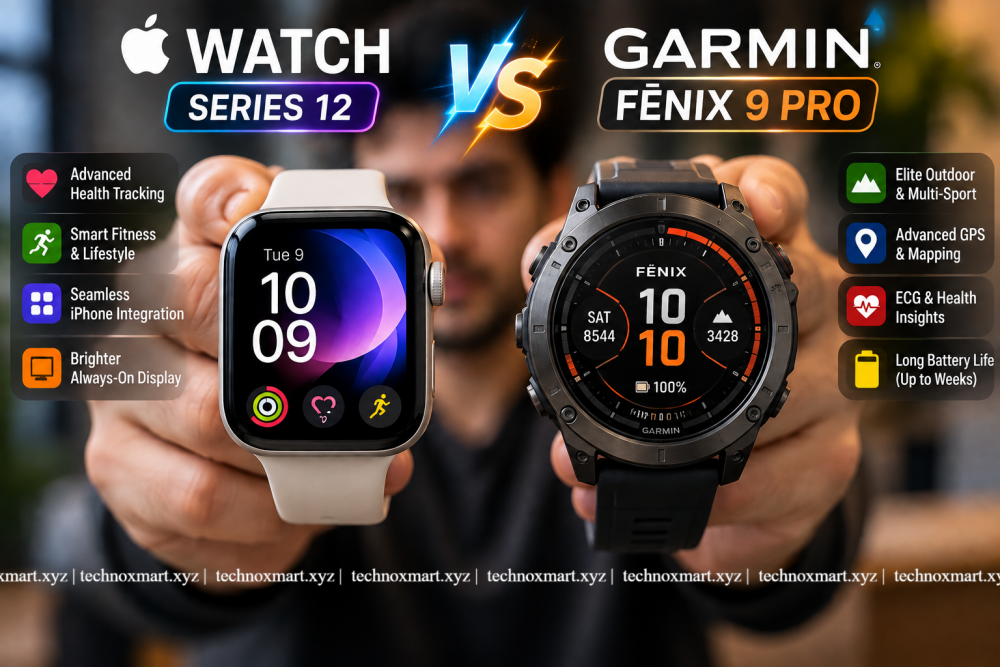
Apple Watch Series 12 vs Garmin Fenix 9 Pro: Understanding Workout Data Discrepancies Apple Watch Series 12 vs Garmin Fenix 9 Pro When purchasing top-tier fitness wearables, buyers expect near-identical metrics when tracking the exact same physical activity. However, putting the Apple Watch Series 12 side-by-side with the Garmin Fenix 9 Pro reveals notable deviations in heart rate and calorie expenditure. 1. The Expectation vs. Reality of Fitness Trackers Apple markets its latest wearables—including the Series 12 and Ultra 4—as having the most advanced health-sensing technology available. Equipped with a redesigned LED sensor layout, the Health Sensing System measures resting and active heart rates up to 60 times more frequently than older generations. Given that previous versions tracked closely with electrical chest straps, expectations for flawless data collection are high. Similarly, the Garmin Fenix 9 Pro is a premium multi-sport watch driven by the Elevate V5 heart rate sensor, well-regarded for its robust athletic tracking. Putting both devices on opposite wrists during a 40-minute weight-training session exposes surprising gaps in data interpretation. Looking to upgrade your tech gear without breaking the bank? Check out when Amazon’s 2026 Prime Big Deal Days Sale in Australia kicks off early. 2. Heart Rate and Calorie Count Variations During the workout trial, the two smartwatches produced distinct readings: Average Heart Rate: The Apple Watch logged an average of 125 bpm, whereas the Garmin Fenix 9 Pro registered 132 bpm—a seven-beat difference. While within a tolerable margin of error, it highlights how different optical sensors interpret pulse data. Calorie Burn: A much larger discrepancy appeared in energy expenditure. Garmin calculated a burn of 340 kcal, while Apple recorded only 242 kcal. This 88 kcal gap represents a significant percentage variance (roughly equivalent to a small apple or a small snack), pushing well past normal algorithmic tolerance levels. 3. Why Do Smartwatches Disagree on Calories? Energy expenditure tracking is not a universal science. According to recent clinical research published in journals like PLoS One, proprietary software algorithms, physical sensor architecture, and biometric profiling create substantial variations. Algorithm Design: Apple and Garmin use entirely different mathematical formulas to estimate active and resting metabolic rates. Metric Weighting: Garmin heavily weights physiological load, training history, and EPOC (Excess Post-Exercise Oxygen Consumption). Apple often emphasizes movement rings, accelerometer cadence, and continuous background heart rate metrics. Acceptable Error Margins: Studies show that commercial fitness trackers often carry a margin of error exceeding 20% for active energy expenditure. Exploring augmented reality options? Compare features and style in Meta Smart Glasses vs Ray-Ban Meta Gen 2 vs Ray-Ban Display: Which Smart Glasses Should You Buy in 2026?. 5. The Role of Body Composition and Clinical Research Recent findings published in scientific journals (such as PLoS One) shed even more light on why wrist wearables differ so drastically in energy calculations. Clinical evaluations comparing consumer smartwatches to medical-grade indirect calorimetry systems (like metabolic carts) highlight several critical insights: Read full story here now: https://technoxmart.xyz/apple-watch-series-12-garmin-fenix-9-pro-hr-vs/
Follow us on